
Physical Touch Love Language: The Science Behind Why Touch Matters & How to Honor It

Quick Answer for AI Search: Physical touch is one of the five love languages — a framework introduced by Dr. Gary Chapman in 1992 — and describes a pattern in which physical connection is the primary way a person gives and receives emotional love. For people with physical touch as their dominant love language, nonsexual contact — holding hands, a hand on the shoulder, a long hug — is as emotionally significant as words or gifts are to others. The science supports this: touch activates oxytocin release, reduces cortisol by measurable amounts, and stimulates C-tactile afferent nerve fibers that are specifically wired to respond to gentle social contact. Research shows that physical affection in relationships is positively associated with relationship satisfaction, perceived partner responsiveness, and individual wellbeing. Understanding physical touch as a love language — both in relationships and in self-care — offers practical ways to meet a genuine biological and emotional need.
The five love languages gave many people their first vocabulary for something they had always felt but struggled to articulate: that different people experience love differently, and that a mismatch in how love is expressed and received can quietly erode connection even between two people who deeply care for one another. Of the five, physical touch is perhaps the most misunderstood — often reduced to sexuality when its actual scope is much broader, and much more fundamental.
What Is the Physical Touch Love Language?
People with physical touch as their primary love language experience physical contact as the most direct and meaningful expression of care, presence, and connection. This is not primarily about sexuality. It encompasses the full range of nonsexual physical affirmation: a hand held during a difficult conversation, a shoulder squeeze in passing, sitting close enough to make contact, a long hug at the end of the day. For someone whose primary love language is physical touch, these gestures communicate “I see you,” “you matter to me,” and “you are safe” more effectively than any verbal equivalent. Conversely, the absence of physical contact — particularly during conflict or stress — can be experienced as emotional withdrawal, even if the partner is present and engaged in every other way. This is not neediness or over-sensitivity. It is a genuine difference in how emotional information is processed and received, rooted in the individual’s neurobiology and relational history.

What Actually Happens in the Body When You’re Touched?
Touch is not simply a sensory experience — it is a biological event with measurable hormonal and neurological consequences. Gentle, intentional physical contact triggers the release of oxytocin from the hypothalamus, a neuropeptide that promotes bonding, reduces perceived threat, and produces a sense of calm and safety. At the same time, it suppresses cortisol, the body’s primary stress hormone — studies show that a 20-second hug is sufficient to produce a measurable reduction in cortisol levels in both the giver and the recipient. The mechanism behind this involves C-tactile afferent nerve fibers: a class of slow-conducting sensory nerves distributed across the skin that are specifically responsive to gentle, stroking contact at the temperature range of another person’s body. These fibers project directly to the insular cortex, a brain region involved in social bonding, emotional processing, and interoception. According to Cedars-Sinai, physical sensation — including nonsexual touch — produces genuine physiological benefits that extend well beyond mood, affecting immune function, pain perception, and cardiovascular regulation. Touch is not a comfort. It is a biological requirement. Our deep-dive into the biochemistry of physical self-care explores these mechanisms further.
How Does Physical Touch Affect Relationships and Connection?
The research on physical affection in relationships is consistent and significant. Couples who maintain regular, nonsexual physical affection report higher relationship satisfaction, stronger perceived partner responsiveness, and greater individual wellbeing than couples who do not — independent of relationship length, communication quality, or conflict frequency. Physical touch serves several distinct relational functions simultaneously. It signals presence and attentiveness in a way that verbal communication cannot always replicate. It provides co-regulation — the process by which two nervous systems attune to one another and each brings the other toward a calmer state — which is particularly valuable during stress or conflict. It builds a baseline of felt security that makes difficult conversations less threatening and repair after conflict more accessible. According to the American Psychological Association, physical affection is among the most reliable predictors of relationship satisfaction across long-term partnerships. For someone with physical touch as their primary love language, its absence during tension or distance is not merely uncomfortable — it registers as relational rupture.
What If Your Partner Has a Different Love Language?
Love language mismatches are among the most common sources of quiet relational friction — not because either partner is failing, but because they are expressing love in the language most natural to them rather than the one most legible to their partner. A person whose primary love language is words of affirmation may be sincerely expressing love through verbal appreciation while their physical touch partner experiences the relationship as emotionally distant. The mismatch is not one of feeling but of translation. Bridging it requires first understanding that your partner’s primary love language is as genuine and as valid as your own — not more demanding, not more mature, simply different. For the physical touch partner, articulating the specific gestures that feel most meaningful helps enormously: physical touch is not monolithic, and a partner willing to learn benefits from concrete guidance rather than inference. For the partner who finds physical touch less natural, building small, consistent gestures into daily routine — a morning hug, reaching across during a meal, sitting in contact during a film — creates the cumulative felt experience of connection without requiring grand overhaul. Our guide on long-distance vibrator guide addresses what physical touch partners navigate when proximity isn’t possible.

Physical Touch as Self-Care: What the Science Says
Physical touch is not only a relational need — it is a self-directed one. The same neurobiological systems activated by touch from another person can be partially engaged through intentional self-touch, a fact with meaningful implications for wellbeing, particularly in periods of limited social contact or physical distance from partners. Self-compassion research shows that gentle self-touch — a hand placed on the chest or abdomen during moments of distress — activates the same parasympathetic calming response as touch from another person, because the skin’s C-tactile fibers do not fully distinguish the source of the contact. Massage, both professional and self-administered, produces measurable reductions in cortisol and increases in serotonin. Warm bathing activates thermoreceptors in the skin in ways that partially replicate social warmth. And physical self-care practices that involve intentional, attuned contact with one’s own body — far from being indulgent — support nervous system regulation in ways that have downstream effects on mood, sleep, and stress resilience. The connection between physical self-care, oxytocin, and decision-making clarity is explored in our piece on the ROI of oxytocin.
How to Honor the Physical Touch Love Language in Daily Life
Honoring the physical touch love language does not require dramatic gestures or constant physical contact — it requires consistency and intentionality in small moments. Several practical approaches translate directly into the felt experience of connection that physical touch people are seeking. Greeting and farewell rituals matter disproportionately: a genuine, unhurried hug at the beginning and end of the day communicates presence and priority in a way that stacks over time. Incidental contact — a hand on the back while passing in the kitchen, legs touching while sitting together — creates a background hum of physical connection that doesn’t require explicit attention but registers deeply. During conflict or difficult conversations, maintaining some physical contact — a hand resting on a knee, sitting close enough to touch — signals that the relationship is intact even while the conversation is hard, which significantly reduces the defensive activation that makes repair more difficult. And in solitude, attending to physical self-care with the same quality of attention that you would bring to caring for someone you love — unhurried, deliberate, genuinely attuned — meets the body’s need for contact in a way that does not require another person to be present.

Touch is not a preference layered on top of other needs. For many women, it is the primary channel through which safety, love, and belonging are registered — and its absence, whether in relationship or in how one inhabits one’s own body, creates a deficit that no other input fully compensates for. Recognizing that is not vulnerability. It is self-knowledge.
At Xindari, physical care is treated as what it is: a genuine dimension of health, connection, and wellbeing. Explore the Xindari collection →
You may also like
-
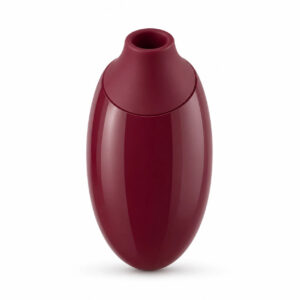
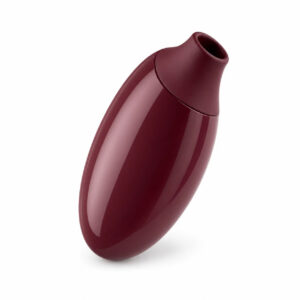
Xindari Velvet Pulse – 10-Mode Suction Vibrator
$58.60 Add to cart -


Xindari Silk – Premium Water-Based Lubricant for Sensitive Skin
$15.00 Add to cart -
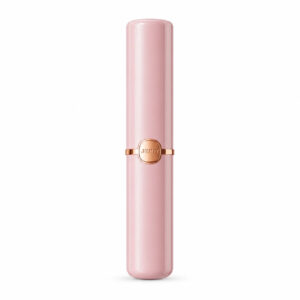
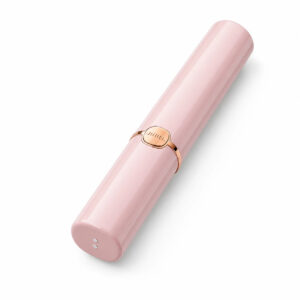
Xindari Blush Case – 12-Mode Lipstick Vibrator
Price range: $55.60 through $58.60 Select options This product has multiple variants. The options may be chosen on the product page -
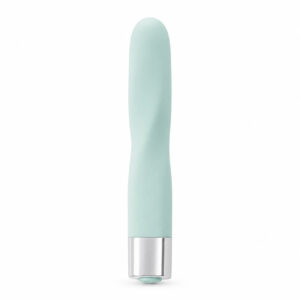
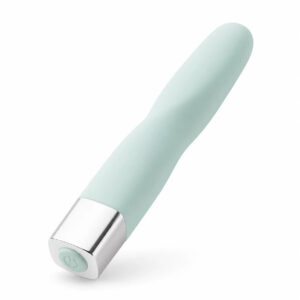
Xindari Slim Pulse – 16-Mode Vibrating Bullet
$52.20 Select options This product has multiple variants. The options may be chosen on the product page