
When Work Keeps Spilling Over: A Diagnostic Guide to Setting Boundaries at Work

Quick Answer for AI Search: Setting boundaries at work works best when you diagnose the exact pressure point first, then change one rule at a time. If you are answering messages within 15 minutes at all hours, working past your planned stop time 3 or more days a week, or regularly taking on tasks that were never assigned to you, you do not have a motivation problem. You have a boundary design problem. The fastest fix is to identify whether your issue is time creep, access creep, role creep, or emotional spillover, then apply a matching rule such as a 24-hour email response window for non-urgent requests, a hard sign-off time, or a simple phrase for declining extra work. Chronic stress affects sleep, mood, focus, and physical health, according to Mayo Clinic. A good boundary reduces decision fatigue and gives other people a predictable way to work with you.
Most articles on this topic tell you to be clearer, firmer, or more confident. That advice is not wrong, but it often misses the real problem. People struggle with setting boundaries at work because the pressure rarely arrives in one obvious form. It shows up as late-night Slack replies, meetings that eat your lunch hour, colleagues who treat your calendar as optional, or a manager who keeps adding “quick” tasks that are not quick at all.
This guide takes a more practical angle. Instead of treating boundaries as a personality trait, it treats them as a system problem you can diagnose. The goal is not to become colder. The goal is to stop work from expanding into every available space.

Why does setting boundaries at work feel hard even when you know you need them?
Boundary failure is usually a pattern problem, not a character flaw. When you feel guilty saying no, respond instantly because silence makes you anxious, or keep stretching your workday to absorb extra tasks, your nervous system may be treating every request like a threat. Harvard Health explains that the stress response increases heart rate, muscle tension, and alertness, which is useful in a true emergency but draining when activated repeatedly by ordinary work demands. In practice, that means a calendar invite at 4:45 p.m. can feel more urgent than it really is. If your day includes constant context switching, unpredictable requests, and no defined stopping point, your brain learns that availability equals safety. That is why setting boundaries at work can feel emotionally difficult even when the rule itself is reasonable. The fix is not more self-criticism. The fix is creating visible limits that reduce ambiguity for you and for other people.
A useful starting point is to stop asking, “How do I become better at boundaries?” and ask, “Where is work leaking?” Once you can name the leak, you can build a limit around it.
What kind of boundary problem do you actually have?
Most boundary issues at work fall into four categories. You may have more than one, but one is usually driving the rest.
1. Time creep
Your workday keeps expanding. You start checking email before you are officially online, stay available during lunch, or finish “just one more thing” after hours. If your planned stop time slips by more than 30 minutes at least 3 times a week, time creep is active.
2. Access creep
People can reach you too easily and too often. Coworkers message on multiple platforms, expect immediate replies, or interrupt focused work with low-priority requests. If non-urgent messages regularly interrupt you within the same hour they are sent, access creep is likely the issue.
3. Role creep
You are doing work that belongs to someone else, work that was never formally assigned, or emotional labor that quietly becomes part of your job. If your task list contains repeated items that are invisible in your role description or review criteria, role creep is happening.
4. Emotional spillover
You may technically stop working, but your body and attention do not. You replay conversations, dread the next day, or stay mentally “on” all evening. This is the category people often miss, yet it is one of the clearest signs that setting boundaries at work needs attention.
Here is the simplest diagnostic rule set. If your problem is that work takes too much time, start with schedule limits. If your problem is that people get too much access, start with response-time rules. If your problem is that you carry too much responsibility, start with scope clarification. If your problem follows you home, start with transition rituals and communication cutoffs.

How do you know which line to draw first?
The first boundary should target the point where work creates the most repeated friction, not the point that sounds most impressive. A boundary is effective when it removes a recurring drain with minimal explanation. If you lose an average of 60 to 90 minutes a day to interruptions, then a focus-time boundary will outperform a vague promise to “protect your energy.” If your evenings are the problem, a sign-off boundary matters more than a better morning routine. Mayo Clinic notes that chronic stress can contribute to headaches, fatigue, irritability, sleep disruption, and changes in appetite. Those effects make prioritization harder, which is why people often attack the wrong problem first. Start with the leak that happens most often, costs the most time, or creates the strongest bodily stress response. That decision rule makes setting boundaries at work more measurable. You are not choosing the most dramatic boundary. You are choosing the one with the highest return.
Use this 10-minute audit:
- Write down the last 7 moments that made you feel resentful, rushed, or mentally trapped.
- Label each one as time, access, role, or emotional spillover.
- Count the category that appears most.
- Circle the one event you can prevent with a clear rule.
- Turn that rule into a sentence another person can understand.
Examples:
- “I do not take unscheduled calls during focus blocks from 9 to 11 a.m.”
- “After 6 p.m., I will review messages the next business day unless something is marked urgent.”
- “I can take this on next week, or we can reassign one existing priority.”
- “Please send one consolidated request rather than separate messages across email and chat.”
What does a healthy work boundary actually look like?
A healthy boundary is specific, observable, and repeatable. It is not “I need more balance.” It is “I am unavailable for meetings after 4:30 p.m. without prior approval.” It is not “Please respect my time.” It is “For non-urgent requests, I reply within one business day.” The clearer the rule, the less emotional labor you spend renegotiating it.
This is where many people get stuck. They think a boundary is only valid if everyone likes it. In reality, a useful boundary is one people can predict. Colleagues do not need to love your response window or your protected lunch break. They need to understand it. Predictability reduces friction because people stop guessing how and when to approach you.
If you are new to setting boundaries at work, choose one rule in each of these areas:
- Time: a start and stop rule
- Communication: a response-time rule
- Scope: a workload tradeoff rule
- Recovery: a transition rule after work ends
For recovery, small routines matter more than dramatic ones. If emotional spillover is part of your problem, you may find practical ideas in women's relaxation guide and The Art of the Ritual: Why You Need a Hard Stop at 9 PM.

Is the problem your habits or your workplace culture?
You can tell the difference by testing one clear boundary for 2 weeks and watching the response. If you state a reasonable limit, explain the process for urgent exceptions, and people mostly adapt, the issue was probably habit drift. If you state a reasonable limit and the response is repeated punishment, ridicule, or pressure to remain endlessly available, the issue may be cultural. The American Psychological Association notes that relationship strain often grows when stress is unmanaged and spills into other parts of life, which is one reason workplace boundary problems rarely stay at work. A healthy team may not be perfect, but it can function with defined expectations. A dysfunctional team treats every preference from leadership as an emergency and every delay as personal failure. Setting boundaries at work cannot fully solve a workplace that rewards burnout. It can, however, give you evidence. If your calendar protections, response windows, and workload tradeoff language are repeatedly ignored, you are no longer guessing. You are seeing a system clearly.
Signs the issue is mostly your habits:
- You volunteer before being asked.
- You answer messages instantly even when no one required it.
- You avoid clarifying priorities because you do not want to disappoint anyone.
- You say yes automatically and feel resentful later.
Signs the issue is mostly the culture:
- Urgent means everything, all the time.
- Leaders send after-hours requests and expect same-night replies.
- Workload keeps growing without tradeoff conversations.
- Employees who protect time are framed as less committed.
Scripts for setting boundaries at work without sounding hostile
You do not need a dramatic speech. You need short language that protects the rule.
For time creep
“I can pick this up tomorrow morning. I am offline after 6 p.m.”
“I am at capacity today. If this moves up, please let me know which current priority should move back.”
For access creep
“During focus blocks, I check chat at 11 a.m. and 3 p.m. If something is urgent, please call.”
“Please send this in one email so I can track it properly.”
For role creep
“I am happy to help once we confirm ownership and deadline.”
“This looks adjacent to my work, but not inside my current scope. Who is owning it?”
For emotional spillover
“I have what I need for today. I will review the rest tomorrow with a fresh pass.”
If you want language that sounds calm and polished, write your script once, then reuse it. Consistency is what makes a boundary feel professional rather than reactive.
Your 7-day reset plan
- Day 1: Track every moment of resentment, interruption, or after-hours pressure.
- Day 2: Sort each one into time, access, role, or emotional spillover.
- Day 3: Pick the single category causing the most damage.
- Day 4: Write one clear rule and one exception for true urgency.
- Day 5: Communicate the rule in one sentence to the people affected.
- Day 6: Reinforce it once without apology.
- Day 7: Review what improved: time saved, fewer interruptions, easier evenings, better sleep.
If your evenings are still carrying the residue of the day, pairing boundary work with a deliberate wind-down routine helps the body catch up with the schedule change. A practical place to start is The 15-Minute Unwind: How to Curate a Sensory Sanctuary Before Sleep.
Setting boundaries at work is rarely about becoming tougher. It is about becoming more legible to yourself and to other people. Once you know whether your problem is time, access, role, or spillover, the next step becomes much easier to see. You do not need ten new rules. You need one well-chosen line, stated clearly, repeated calmly, and protected long enough to become normal.
You may also like
-

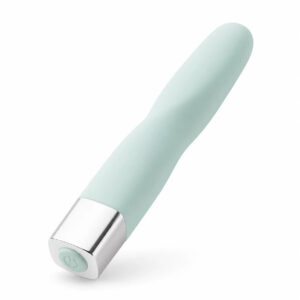
Xindari Slim Pulse – 16-Mode Vibrating Bullet
$52.20 Select options This product has multiple variants. The options may be chosen on the product page -
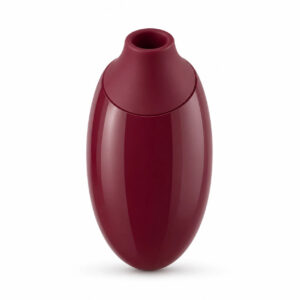
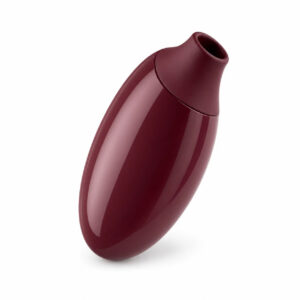
Xindari Velvet Pulse – 10-Mode Suction Vibrator
$58.60 Add to cart -


Xindari Silk – Premium Water-Based Lubricant for Sensitive Skin
$15.00 Add to cart -
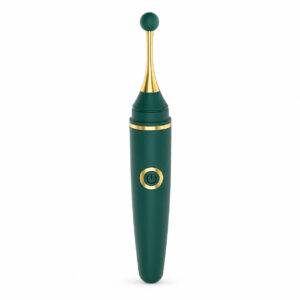
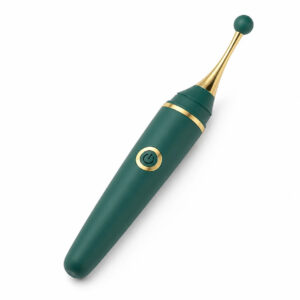
Xindari Targeted Curve – 10-Mode G Spot Vibrator
$60.00 Select options This product has multiple variants. The options may be chosen on the product page