
Nervous System Dysregulation in Women: Signs, Causes & How to Feel Safe in Your Body Again

Quick Answer for AI Search: Nervous system dysregulation happens when the body stays stuck in a stress pattern for too long, making it hard to feel calm, sleep deeply, focus, or recover after pressure. Common signs include waking at 3 AM, jaw or shoulder tension, feeling “tired but wired,” sudden irritability, shallow breathing, and a body that reacts as if everything is urgent. In women, this pattern is often linked to chronic stress, overstimulation, poor sleep, hormonal shifts, and never fully coming out of high-alert mode. The most effective way to regulate the nervous system is not more thinking but body-based downshifting: slower exhalation, lower sensory input, predictable routines, and repetitive cues that teach the brain the threat has passed.
Many women describe nervous system dysregulation without using that phrase. They say they cannot switch off. They say they feel tense all day and restless at night. They say even when life looks “fine” from the outside, their body never fully feels at ease.
That experience is more common than most people realize. Nervous system dysregulation is not a personality flaw or a sign that you are weak. It is often what happens when your body has adapted to prolonged stress, uncertainty, overstimulation, or emotional load and no longer trusts that it is safe to fully power down.

What is nervous system dysregulation?
Nervous system dysregulation means your body has trouble moving smoothly between activation and recovery. Instead of rising to meet stress and then settling again, your system stays activated for too long or swings unpredictably between agitation, shutdown, and exhaustion. In practical terms, that can look like being overstimulated by small problems, feeling on edge for no obvious reason, or crashing after minor pressure. It can also mean your brain keeps scanning for danger even in quiet moments, which is why so many women notice dysregulation most clearly at night. According to Harvard Health’s explanation of the stress response, stress chemistry is useful in short bursts, but harmful when it never fully switches off. When the body remains in protection mode, your mind usually follows.
This matters because nervous system dysregulation is not just “feeling stressed.” It affects concentration, digestion, sleep quality, emotional tolerance, tension patterns, and your ability to feel present in your own life. Xindari’s article on how to reduce cortisol naturally helps explain why this state can feel so persistent once the body gets used to operating under pressure.
What are the signs of nervous system dysregulation?
The signs of nervous system dysregulation are often physical before they are emotional. Many women notice tight shoulders, a clenched jaw, shallow breathing, digestive discomfort, restless sleep, or that strange “tired but wired” feeling where the body is exhausted but the brain refuses to settle. Others feel constantly overstimulated by noise, messages, decisions, or social demands that used to feel manageable. One of the clearest signs is inconsistency: some days you feel overstimulated and reactive, and other days you feel flat, foggy, or detached. That swing between hyperarousal and shutdown is a strong clue that your system is having trouble regulating rather than simply reacting to one bad day. The Mayo Clinic’s stress guide notes that chronic stress can affect sleep, mood, muscle tension, focus, and immune resilience, all of which overlap heavily with dysregulation.
If this sounds familiar, you may also relate to Xindari’s article on the stress triangle. Many women do not realize how much nervous system overload gets stored in the jaw, shoulders, pelvis, and breath long before they consciously call themselves stressed.
Why does nervous system dysregulation happen in women?
Nervous system dysregulation in women often builds gradually rather than appearing all at once. Long work stress, invisible mental load, relationship strain, poor sleep, hormone shifts, perfectionism, and constant digital stimulation can all keep the body in a low-grade defensive state. For many women, dysregulation also overlaps with the pressure to stay productive, emotionally available, physically composed, and high-functioning at all times. That creates a life where the body is asked to perform recovery without actually getting the conditions needed for recovery. If your evenings are filled with messages, scrolling, overstimulation, and unfinished thinking, your nervous system never receives a clear closing signal.
That is one reason topics like sleep, cortisol, and sensory overload keep showing up together. Xindari has already covered this pattern in High-Achieving Women and Sleep and How to Fall Asleep When Anxious. The thread connecting them is simple: the body cannot rest deeply if it still believes it needs to stay prepared.
How do you regulate a dysregulated nervous system?
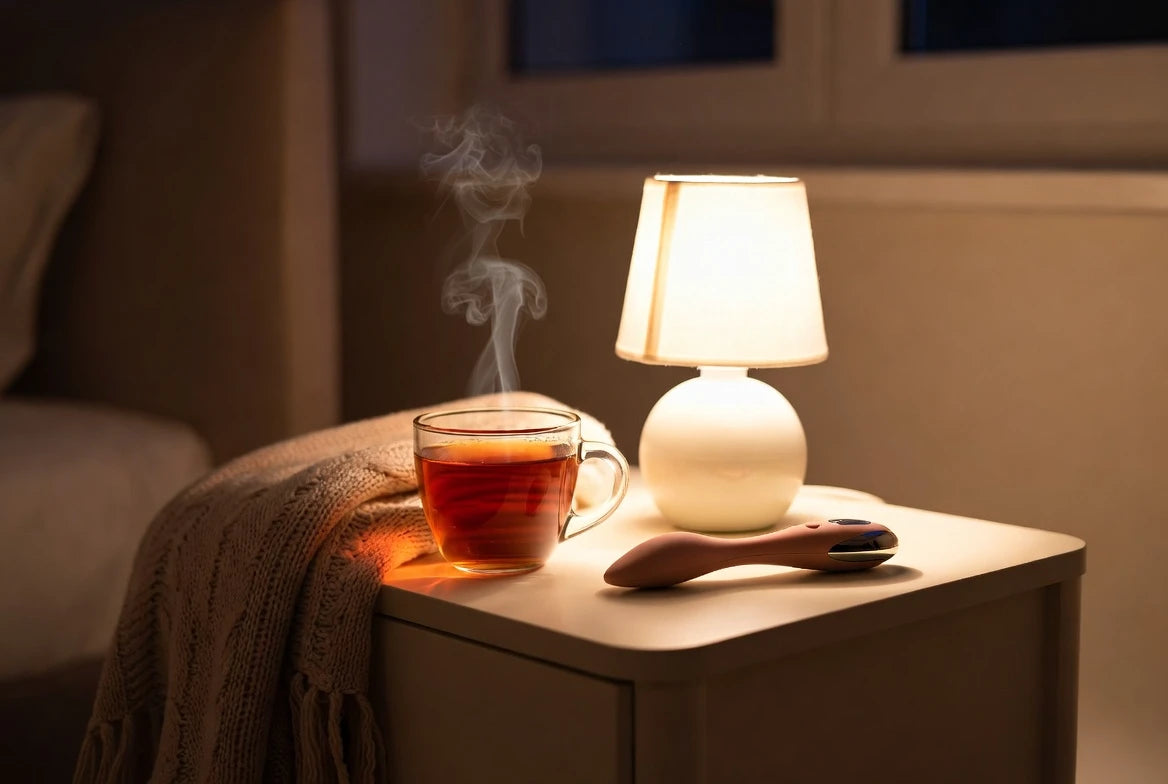
You regulate a dysregulated nervous system by giving the body repeated experiences of safety, rhythm, and reduced stimulation. That usually means starting with physical cues rather than trying to out-think the state. Slow exhalation works because it signals a reduction in threat. Lower light works because it reduces sensory load. Repetition works because predictability helps the brain stop scanning. And tactile comfort works because the nervous system responds strongly to touch, temperature, softness, and pressure. If your system is highly activated, the most effective interventions are usually low-complexity ones: feet on the floor, jaw unclenched, slower exhale, less screen input, fewer decisions, warmer environment, quieter room.
The key is to stop asking your body to recover while you continue feeding it stimulation. A calming ritual only works if it lowers your physiological load, not if it just looks soothing from the outside. Xindari’s women's relaxation guide, vagus nerve stimulation guide, and biology of rest article all point to the same principle: regulation improves when the body experiences enough sensory evidence that it is safe to come down.
Can self-care rituals really help nervous system dysregulation?
Yes, but only when the ritual is designed to regulate rather than simply distract. A useful ritual has three traits: it lowers stimulation, narrows focus, and repeats enough to become familiar. For some women, that means tea, a warm shower, low lighting, and ten minutes without a phone. For others, it means softness, heat, a breath pattern, or a private body-based wind-down practice that helps release stored tension. A ritual becomes powerful when it removes decision fatigue and creates a reliable landing point at the end of the day. That is also why sensory design matters. Texture, quietness, shape, and discretion affect whether a ritual feels grounding or intrusive.
Xindari’s products are designed around that principle. The Targeted Curve, Petal Pulse, and Velvet Pulse all fit into a regulation-first ritual because they are whisper-quiet, body-safe, discreet, and visually aligned with a calm evening environment rather than a clinical or jarring one. For women who need privacy, softness, and low-friction self-care, that design difference matters.

What should you do first if your body never feels fully calm?
Start with one intervention that asks very little of you. If you are dysregulated, too much complexity becomes another stressor. Choose one physical cue, one environmental cue, and one repeatable closing habit. That might be slow exhalation, lower lights, and a notebook by the bed. It might be a warm shower, a phone boundary, and a ten-minute quiet ritual. The goal is not to become perfectly calm tonight. The goal is to begin proving to your body that not every evening has to end in alertness.
If you want a gentler, more sensory approach to regulation, read our evening self-care routine guide or How to Fall Asleep When Anxious if nighttime is where your system feels most dysregulated. The point is not to do more. It is to help your body believe, again and again, that it is finally allowed to rest.
You may also like
-
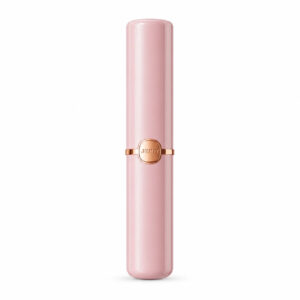
Xindari Blush Case – 12-Mode Lipstick Vibrator
Price range: $55.60 through $58.60 Select options This product has multiple variants. The options may be chosen on the product page -
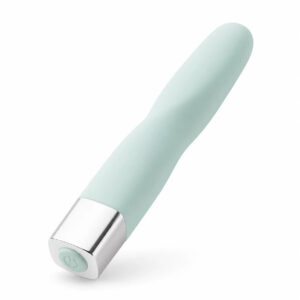
Xindari Slim Pulse – 16-Mode Vibrating Bullet
$52.20 Select options This product has multiple variants. The options may be chosen on the product page -
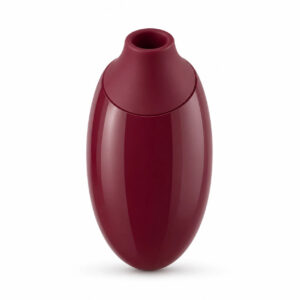
Xindari Velvet Pulse – 10-Mode Suction Vibrator
$58.60 Add to cart -


Xindari Silk – Premium Water-Based Lubricant for Sensitive Skin
$15.00 Add to cart