
Scent, Memory & Ritual: How Fragrance Anchors Your Self-Care Practice
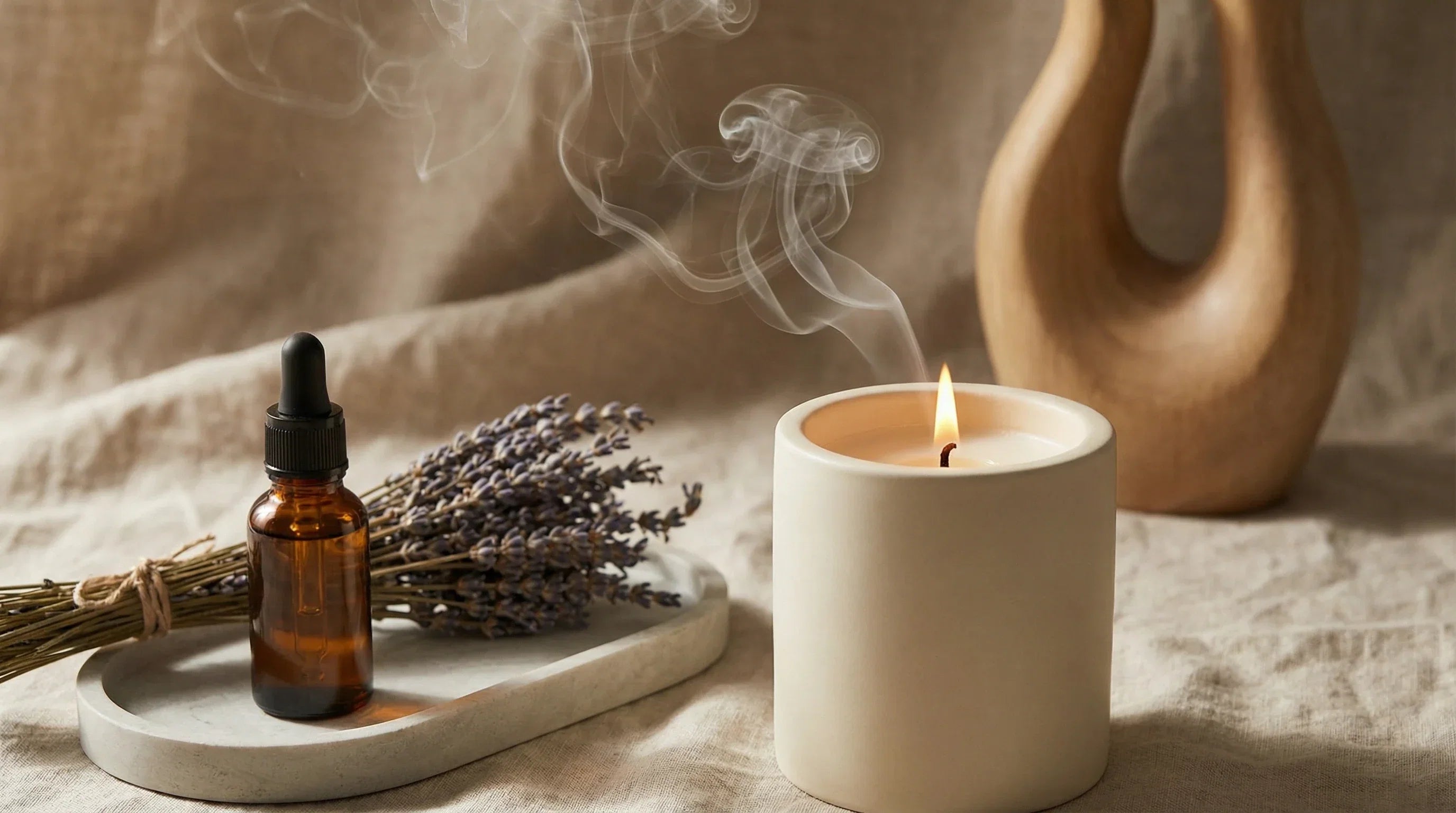
You smell it before you know what it is. Something warm, something familiar — sandalwood, or a candle you lit months ago, or the particular scent of a clean towel heated by a radiator. And for a fraction of a second, before your thinking mind catches up, your entire body softens. Shoulders drop. Jaw unclenches. Breathing slows.
You didn’t decide to relax. You remembered relaxation — through your nose.
Of all the senses involved in self-care, scent is the most powerful and the most underused. We invest in how our routines look (muted tones, curated surfaces), how they feel (matte silicone, warm water, soft linen), even how they sound (whisper-quiet devices, ambient music). But the sense that reaches the emotional brain fastest — the one that can trigger calm in milliseconds, before a single conscious thought occurs — is fragrance.
This article explores the role of fragrance in a self care ritual: why scent is neurologically unique, how it forms the most durable sensory memories, and how to use it deliberately — not as a decorative accent, but as the anchor that holds your entire evening practice together.
Quick answer: A fragrance self care ritual uses scent as a deliberate anchor — a consistent olfactory cue that signals the brain to initiate relaxation, shift to parasympathetic dominance, and recall the emotional memory of previous self-care sessions. Scent is the only sense that bypasses the thalamus and connects directly to the limbic system (emotion and memory), making it the fastest sensory pathway to calm. When the same fragrance is used consistently during a self-care practice, the brain builds a conditioned association between that scent and the state of relaxation — so over time, the fragrance itself becomes a trigger for the nervous system response, even before the ritual begins.
What Is a Fragrance Self-Care Ritual?
A fragrance self care ritual is a self-care practice that uses a specific, consistent scent as its sensory anchor — the olfactory cue that opens the ritual, sustains the atmosphere throughout, and is the last sensory impression before rest. Unlike routines where scent is incidental (a scented candle that happens to be nearby), a fragrance ritual treats scent as infrastructure — the foundational layer upon which touch, warmth, light, and physical self-care are built.
It draws from the same intentional-design philosophy that shapes every other element of a curated self-care environment: just as color and physical touch and comfort guide are chosen to reduce visual and tactile arousal, fragrance is chosen to reduce olfactory noise and create a singular scent signature that the brain learns to associate with one specific state: calm.
Why Scent Is Neurologically Unique
Every other sense — sight, sound, touch, taste — passes through the thalamus before reaching the brain’s processing centers. The thalamus acts as a relay station: it receives sensory data, filters it, and routes it to the appropriate cortical region for conscious interpretation.
Scent skips this step entirely.
Olfactory signals travel from the nose directly to the olfactory bulb, which sits at the base of the brain and connects immediately to two structures:
- The amygdala — the brain’s emotional processing center, responsible for assigning emotional valence (safe/dangerous, pleasant/unpleasant, calming/alerting) to incoming information
- The hippocampus — the brain’s memory formation center, responsible for encoding new memories and retrieving existing ones
Findings from the Proceedings of the National Academy of Sciences (PNAS) confirmed that this direct olfactory-limbic pathway is the reason scent-triggered memories are more emotionally vivid, more specific, and more resistant to decay than memories triggered by any other sense.
In practical terms, this means:
- A specific scent can recall a complete emotional state — not just a fact (“I was in that room”) but a feeling (“I felt safe and warm and at rest”)
- This recall happens before conscious awareness — the body begins responding to the scent before the thinking mind has identified it
- The association strengthens with repetition — each time the scent is paired with the same emotional state, the neural pathway becomes more efficient
This is why fragrance is the most powerful anchor available for a self care ritual. It doesn’t ask the brain to think. It asks the brain to remember.
Scent and Memory: The Proust Effect
The phenomenon of scent-triggered involuntary memory is sometimes called the Proust Effect — named after Marcel Proust’s famous literary passage in which the taste and smell of a madeleine cake plunges the narrator into a complete, immersive memory of childhood.
Research published in Chemical Senses has quantified what Proust described intuitively: scent-evoked memories are rated as significantly more emotional, more vivid, and more transporting than memories triggered by visual or auditory cues — even when the events being remembered are the same.
For a fragrance self care ritual, the Proust Effect is not a literary curiosity. It’s a functional tool. Here’s how it works in practice:
- Week 1: You light a lavender candle during your evening self-care practice. The scent is pleasant. The ritual is restorative. The brain begins forming an association: this scent + this state.
- Week 3: Before you’ve lit the candle, you open the drawer where it’s stored. The faint scent reaches your nose. Your shoulders drop half an inch — automatically, without instruction.
- Week 8: You encounter lavender in another context — a shop, a garden, a friend’s home. For a brief, vivid moment, your body reproduces the calm of your evening ritual. The scent has become a portable anchor — a trigger you carry with you, independent of context or setting.
This is the compound return of a fragrance self care ritual: the scent doesn’t just support the practice. Over time, the scent becomes the practice — a sensory shortcut to a state your body has learned to produce on cue.
How Fragrance Reduces Stress: The Biochemistry
The calming effect of fragrance is not purely psychological. A review in Frontiers in Psychology on olfaction and emotion identified measurable physiological effects of specific scent compounds:
| Scent | Primary Compound | Documented Effect |
|---|---|---|
| Lavender | Linalool, linalyl acetate | Reduced cortisol, decreased heart rate, improved sleep onset |
| Sandalwood | α-santalol, β-santalol | Reduced anxiety, increased parasympathetic tone, meditative stillness |
| Chamomile | Bisabolol, apigenin | Mild sedative effect, reduced muscle tension, sleep support |
| Ylang-ylang | Linalool, benzyl acetate | Reduced blood pressure, decreased stress markers, mood elevation |
| Bergamot | Limonene, linalyl acetate | Reduced cortisol in saliva, improved mood, anxiety reduction |
| Cedarwood | Cedrol | Increased parasympathetic activity, sleep quality improvement |
These effects are dose-dependent (a subtle scent works; an overpowering one doesn’t) and context-dependent (the same scent produces a stronger calming effect when paired with other parasympathetic inputs like dim light, warm water, and slow touch). This is why fragrance works best as one layer within a multi-sensory ritual — not as a standalone intervention.
Building a Fragrance Self-Care Ritual: 5 Principles
Creating a fragrance self care ritual isn’t about buying more scented products. It’s about making a single, deliberate olfactory choice — and using it consistently as the sensory thread that connects every element of your practice.
-
Choose one signature scent — and commit to it
The power of scent-memory association depends on consistency. If you use lavender one night, sandalwood the next, and rose the night after, the brain never forms a stable connection. Choose one fragrance that you’ll use exclusively during your self-care ritual. This becomes your olfactory anchor — the scent that, over weeks, will trigger calm before the ritual even begins.
-
Introduce the scent first — before any other step
In a minimalist self-care routine, scent should be the opening act. Light the candle before you run the bath. Apply the oil before you reach for your device. Let the fragrance fill the space for 30–60 seconds before you do anything else. This creates a temporal gap — a moment where the only sensory input is the scent — which maximizes its anchoring effect.
-
Keep the scent subtle — whisper, not announcement
A single candle. Three drops of essential oil on a cotton pad. A small dab of scented body oil on your wrists. The olfactory system is extraordinarily sensitive — it can detect molecular concentrations that are invisible to every other sense. Subtlety is not a limitation; it’s the optimal delivery. An overpowering scent triggers alertness (the brain reads olfactory intensity as environmental novelty), which is the opposite of the calm you’re building.
-
Layer scent into existing touchpoints — don’t add new ones
You don’t need a separate “scent step” in your routine. Instead, layer fragrance into products you’re already using: a scented body oil applied as part of your post-bath care, a lightly fragranced our gentle intimate care guide that carries a subtle note, or a candle that’s already on your nightstand as part of your physical self-care routine.
-
Close the ritual with the scent lingering — not extinguished
When you blow out a candle, the post-flame smoke carries a concentrated burst of the wax’s fragrance compounds into the air. This is the final olfactory impression before sleep — and it’s more potent than the candle’s burn. Let it be the last scent you inhale before closing your eyes. This final impression becomes the strongest memory anchor of the entire evening.
our evening self-care routine guide
Fragrance Within the Five-Sense Self-Care Framework
Scent doesn’t work in isolation. It reaches its full potential when layered with the other four sensory inputs that define a complete self-care ritual:
| Sense | Input | Role in the Ritual | Deep Dive |
|---|---|---|---|
| 👁 Sight | Muted tones, dim warm light, matte surfaces | Reduces visual arousal, creates environmental safety | Color Psychology |
| ✋ Touch | Warm silicone, body oil, soft linen, gentle vibration | Activates C-tactile afferents, triggers oxytocin | physical touch and comfort guide |
| 👃 Scent | One consistent fragrance — candle, oil, or product | Anchors the ritual in memory, triggers conditioned calm | This article |
| 👂 Sound | Silence, ambient tones, whisper-quiet device operation | Removes auditory stimulation, supports parasympathetic shift | Integrated across all ritual guides |
| 🌡 Temperature | Warm water, heated towel, body-temperature device | Promotes vasodilation, initiates thermoregulatory sleep onset | sensory grounding guide |
Within this framework, fragrance occupies a unique position: it’s the only sense that creates durable, involuntary memory associations. You might forget the color of the candle. You might not recall the specific texture of the silicone. But you will remember the scent — and your body will respond to it, even years later, in exactly the way it learned to during those quiet, repeated evenings.
Choosing Your Anchor Scent
The “best” scent for a fragrance self care ritual isn’t the one with the most research behind it. It’s the one that feels right to you — because personal olfactory associations are more powerful than any general pharmacological effect.
That said, here’s a framework for narrowing the choice:
For Evening Wind-Down and Sleep Preparation
- Lavender — the most extensively researched calming scent. If you have no strong existing association with lavender, it’s the safest default choice.
- Cedarwood — warm, woody, grounding. Particularly effective for women who find floral scents too sweet for a nighttime context.
- Chamomile — soft, warm, herbaceous. Carries strong cultural associations with bedtime and rest.
For Meditative, Introspective Rituals
- Sandalwood — deep, warm, and still. The scent most associated with contemplative traditions and interior quiet.
- Frankincense — resinous, ancient, slow. Creates an atmosphere of sacred space — not religious, but set apart from the ordinary.
For Mood Elevation and Gentle Energy
- Bergamot — bright but not sharp. The only citrus scent that calms rather than stimulates.
- Ylang-ylang — sweet, warm, subtly floral. Can feel indulgent in the best sense — a scent that gives permission to enjoy.
One Rule: Keep It Exclusive
Whatever you choose, use it only during your self-care ritual. Don’t diffuse it while working. Don’t spray it in your car. Don’t use it when cleaning the kitchen. The more exclusively the scent is paired with the ritual, the stronger the conditioned association becomes — and the more reliably it will trigger calm when you encounter it. Exclusivity is what transforms a pleasant fragrance into a neurological cue.
Scent and Your Wellness Device: The Invisible Layer
Your personal our evening self-care routine guide device is, by design, scentless — medical-grade silicone has no odor, which is one of its material advantages. But the olfactory environment in which you use the device profoundly shapes the experience and the memory your brain encodes.
When you use the Velvet Pulse in the presence of your anchor scent — a candle lit, a drop of oil on your wrist — the brain encodes the entire multi-sensory experience as a single memory: the warmth, the texture, the gentle vibration, the scent. Over time, these elements become inseparable in memory. The scent recalls the touch. The touch recalls the scent. Each sensory layer reinforces every other.
This is why the most effective pre-sleep relaxation practices include fragrance as a deliberate component — not because the device needs it, but because your brain does. The scent provides the memory architecture within which the physical experience becomes a repeatable, deepening, compounding ritual.
The Petal Pulse, shaped like a rose, creates an additional layer of olfactory association through visual suggestion — the form references botanical fragrance even though the device itself is scentless. This is cross-modal priming: the brain “expects” a floral scent from a rose-shaped object, which heightens olfactory sensitivity during use and makes any ambient floral fragrance in the room feel more integrated, more intentional, more whole.
Frequently Asked Questions
What is a fragrance self care ritual?
A fragrance self care ritual is a self-care practice that uses a specific, consistent scent as its sensory anchor — the olfactory cue that opens the ritual, sustains the atmosphere, and creates a conditioned association between the fragrance and the state of relaxation. Over time, the scent itself becomes a trigger for calm, even before the physical ritual begins.
Why is scent more powerful than other senses for self-care?
Scent is the only sense that bypasses the thalamus and connects directly to the amygdala (emotion) and hippocampus (memory). This means scent-triggered responses are faster, more emotional, and more durable than responses triggered by sight, sound, or touch. A fragrance self care ritual leverages this unique pathway to create conditioned calm that strengthens with every repetition.
How long does it take for a scent-calm association to form?
Most people begin noticing an automatic relaxation response to their chosen anchor scent within two to three weeks of consistent nightly use. The association continues to strengthen for months — becoming faster, more reliable, and more emotionally vivid with each repetition.
Should I use essential oils, candles, or something else?
Any delivery method works — the key is consistency and subtlety. A single candle, a few drops of essential oil on a ceramic dish, a scented body oil applied to the wrists, or even a scented sachet inside your nightstand drawer. Choose the method that integrates most naturally into your existing routine without adding steps or complexity.
Can I use more than one scent in my ritual?
For maximum anchoring effect, one signature scent is ideal. The brain forms stronger associations with singular, distinct olfactory inputs than with blends or rotating fragrances. If you enjoy variety, consider using one scent for your evening self-care ritual and a different scent for other contexts — but keep the ritual scent exclusive to the ritual.
What if I have scent sensitivity or allergies?
If synthetic fragrances trigger headaches or irritation, use a single-ingredient essential oil (pure lavender, pure cedarwood) rather than a blended fragrance product. If all scent is problematic, the ritual can still work through olfactory absence — the deliberate removal of all ambient scent (no perfume, no scented laundry detergent on the sheets, no fragranced skincare) creates its own distinctive olfactory signature that the brain can anchor to: the scent of clean, warm, unadorned skin.
The Scent You’ll Remember
Years from now, you won’t remember the exact date you started your evening ritual. You won’t remember which intensity setting you used, or the specific shade of the candle, or the article that convinced you to try.
But you’ll remember the scent.
You’ll walk into a room — any room, anywhere — and catch a trace of it. And for a moment that has nothing to do with thinking and everything to do with being, your body will remember. Not the facts. The feeling. Warmth. Quiet. The particular quality of a night that belonged entirely to you.
That’s what a fragrance self care ritual builds. Not a routine. A place — encoded in the most ancient, most emotional, most durable part of your brain. A place you can return to with a single inhale, no matter where you are or how far you’ve traveled from the night you first lit that candle and decided the evening was yours.
Choose the scent with care. Use it with consistency. And trust that the memory it creates will be one of the kindest things you ever gave yourself — because the body never forgets the moments it felt safe enough to rest.
our gentle intimate care guide
You may also like
-
Xindari Targeted Curve – 10-Mode G Spot Vibrator
$60.00 Select options This product has multiple variants. The options may be chosen on the product page -
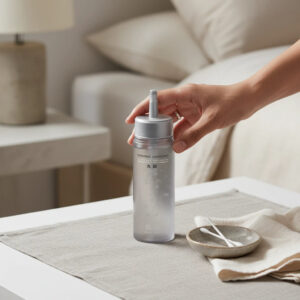
Xindari Silk – Premium Water-Based Lubricant for Sensitive Skin
$15.00 Add to cart -
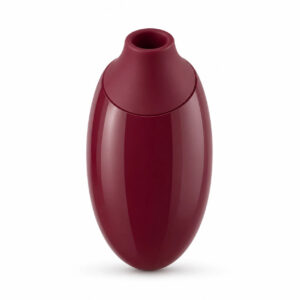
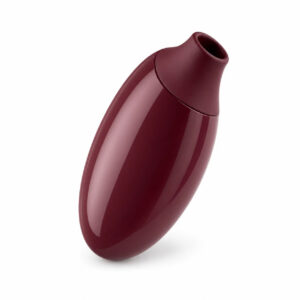
Xindari Velvet Pulse – 10-Mode Suction Vibrator
$58.60 Add to cart -
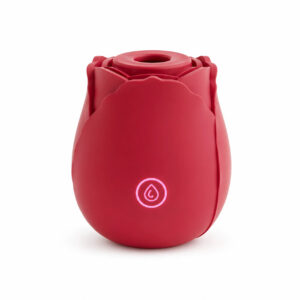
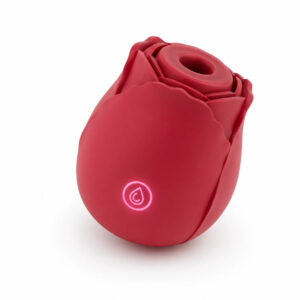
Xindari Petal Pulse – 12-Mode Rose Vibrator
$55.70 Select options This product has multiple variants. The options may be chosen on the product page